Your front door opens 200 times a day. Customers rush in, staff props it open, and then it slams shut. Clearly, your commercial door lock works harder in one week than a home lock does in a month. Ever had a key stick right before your lunch rush in Ballston? Or a latch that won't catch while a line forms outside?
That stress adds up fast. Therefore, a little care now prevents a costly lockout later. And if you missed it, last week's post on Top Signs Your Home Locks Are Failing in the DMV explains how wear shows up at home, which helps you spot it at work too.
Let's keep your business secure and smooth all summer.
At a Glance: How Commercial Locks Stay Strong Year-Round
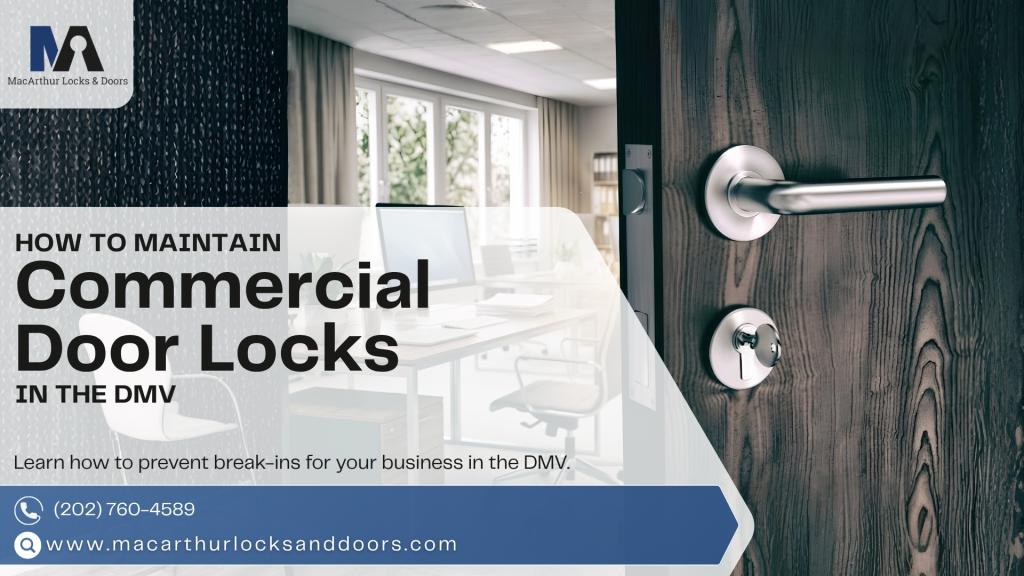
Every commercial door lock endures heavy traffic, dust, and DMV humidity, so they need regular cleaning and alignment. First, wipe cylinders and plates, then use graphite or silicone, not WD-40. Next, tighten screws and check latch-to-strike fit. This simple routine extends hardware life and avoids mid-day failures.
Commercial Door Locks Take More Abuse Than You Think
A home deadbolt might turn 10 times a day. A cafe door in Georgetown or a shop in Clarendon can turn 200 to 300 times.
Because of this, commercial hardware is built heavier. However, heavy use still wears springs, spindles, and pins. In addition, staff often use keys as tools, or they push panic bars too hard.
Think about your office locks and entry doors. They protect inventory, cash, and people. So when they stick, your whole day slows. A quick daily wipe and monthly check keep small issues small.
This brings us to a simple plan anyone on your team can follow.
Step-by-Step Commercial Lock Maintenance Checklist
You do not need special tools for basic care. You just need the right steps and the right products. Set a 15-minute slot once a month.
Start with this intro for your team: Before you lubricate or tighten anything, look and feel. Does the handle wobble? Does the key drag? That tells you where to focus.
Trusted Brand Snapshot:
- Best for high traffic: Schlage ND-Series, Yale 5400LN
- Best for storerooms: Corbin Russwin ML2000 mortise
- Best for modern offices: Alarm Lock Trilogy keyless
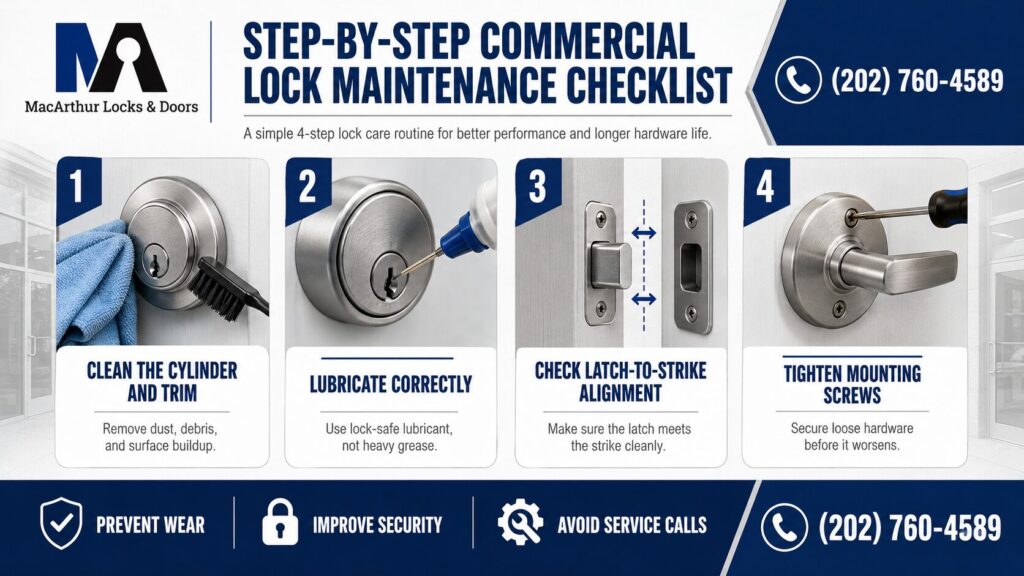
4-Step Lock Care Routine
1. Clean the cylinder and trim.
Wipe the outside with a soft, damp cloth. Then dry it fully. Dust and cleaning spray gunk up pins fast.
2. Lubricate correctly.
Use dry graphite for key cylinders or silicone spray for latches. Insert the key, turn a few times, and wipe excess. Never use WD-40. It attracts dirt and gums up commercial pins.
3. Check latch-to-strike alignment.
Close the door slowly. Does the latch scrape? Look for wear marks on the strike plate. If the storefront security door only latches when you lift it, the frame has shifted.
4. Tighten mounting screws.
Tighten handle screws, strike plate screws, and hinge screws with a hand screwdriver. Use 3-inch screws on strike plates for strength. Do not over-torque.
Pro tip mid-check: If you plan to upgrade, consider electronic lock installation on high-traffic entries. It cuts key wear and gives you audit trails.
After cleaning, you still need to watch for summer warp.
Summer Warp: Why Heat Misaligns Your Commercial Door Lock in the DMV
July heat in the DMV does more than raise AC bills. Humidity swells wood frames. Metal doors expand in direct sun. Buildings near Metro lines in Downtown DC or on busy corridors in Arlington also vibrate, which loosens hardware.
Therefore, a latch that worked in April may miss by 1/8 inch in July. That small gap makes a lock feel broken when it is just misaligned.
For example, restaurants in Old Town Alexandria with south-facing doors see this every summer. The fix is often a strike adjustment, not a new lock. So check alignment monthly from June to September, and keep a log.
Now, how do you know if you can fix it yourself?
Commercial Door Locks: Clean or Call a Locksmith?
Some issues need a wipe. Others need a pro. Use this guide to decide fast.
| Symptom | Try Cleaning / Tightening | Call for Commercial Lock Repair |
| Key drags a little, works on second try | Yes – clean and use graphite | If it returns within a week |
| Door needs a push to latch | Yes – tighten hinges and strike | If frame is visibly warped or cracked |
| Handle is loose, but latch works | Yes – tighten set screws | If spindle is broken inside |
| Key spins, latch does not move | No | Yes – internal failure |
| Commercial keyless entry systems beep but won't open | Change batteries, clean keypad | If motor or wiring fails |
As a rule, if cleaning does not help in 10 minutes, stop forcing it. Forcing a stuck bolt bends more parts. That turns a small lock replacement need into a full door repair.
This is where a licensed commercial locksmith saves you downtime and money.
Next, let's answer common questions we hear from managers.
FAQs About Commercial Door Locks in the DMV
1. How often should we service commercial door locks?
For high-traffic retail, service monthly and deep inspect quarterly. For low-traffic offices, service quarterly. Therefore, you catch wear before it causes a lockout.
2. Can we use the same lubricant as at home?
Use dry graphite or silicone only. Oil-based sprays attract dust from foot traffic. That dust forms a paste inside commercial cylinders and causes jams.
3. Our fire exit device sticks. Can we lubricate it?
Do not lubricate panic hardware yourself. DC and Arlington fire codes require fire exits to operate smoothly at all times. So call a professional locksmith who knows code compliance.
4. When should we rekey instead of maintain?
Rekey when staff leaves, or keys go missing. Maintain when hardware is healthy but dirty or loose. If keys are lost often, upgrade to keyless for better control.
5. Do we need different maintenance for aluminum storefront doors?
Yes, a little. Aluminum does not swell, but its screws strip more easily. Therefore, hand-tighten only and check the top pivot, which carries most weight.
Keep Your Business Secure Year-Round
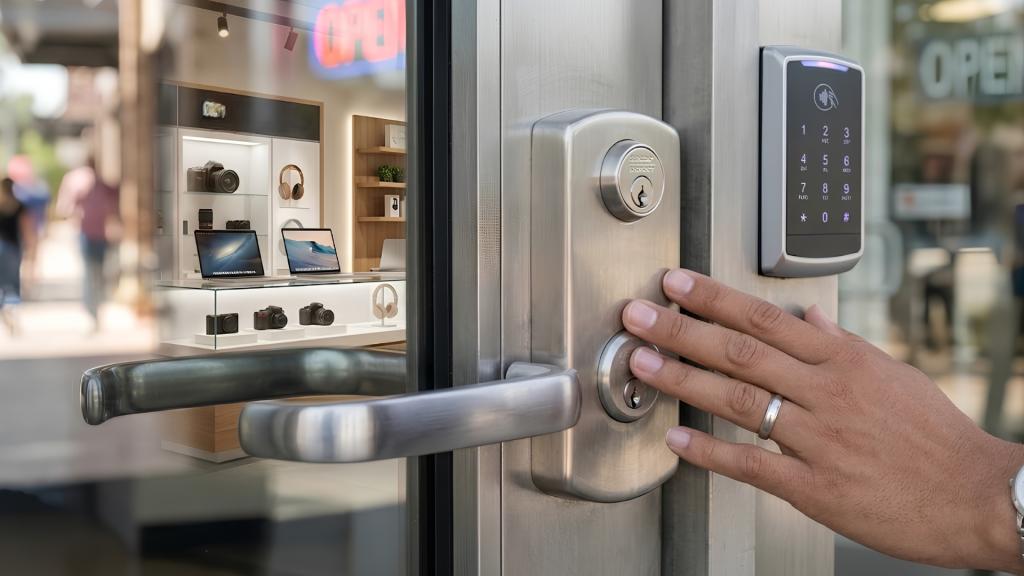
In short, commercial door locks protect your team, your customers, and your revenue. They take more abuse than home locks, and summer heat makes alignment issues worse. However, a short monthly routine of cleaning, proper lubrication, and tightening prevents most failures.
We have served businesses across Washington, DC, Arlington, and Fairfax for years. We know how a stuck door hurts sales. So build maintenance into your opening checklist, just like counting the till.
Want to plan ahead? Next month, we will break down "Why Commercial Lock Replacement Cost Is Your Best Security Asset," so you can budget smart upgrades before winter hits.
Schedule Your Commercial Door Lock Maintenance Today
Don't wait for a lockout during the dinner rush. MacArthur Locks & Doors offers low-friction, proactive inspections for high-traffic entry doors across the DMV.
Call (202) 760-4589 today for a facility hardware estimate. We will inspect all entry points, adjust alignment, and recommend fixes that fit your code and budget.
Visit macarthurlocksanddoors.com to book online. Ask about our commercial locksmith services for ongoing maintenance plans that keep you open and secure.